10 Temples to Visit in Kyoto, and What to Find at Each
Here are ten Kyoto temples, grouped by area:
- North-West Kyoto: Kinkaku-ji, Ryōan-ji
- Arashiyama & Sagano: Tenryū-ji
- Northern Higashiyama: Ginkaku-ji, Nanzen-ji
- Southern Higashiyama: Kiyomizu-dera, Sanjūsangen-dō, Chion-in
- South & Fushimi: Tōfuku-ji, Tō-ji
At each, there's one thing to find once you're through the gate. Each entry below says what the temple is, gives you that one detail to look for, and points to the rest of its story, which is in its own guide in Sacred Kyoto.
Fushimi Inari is a shrine, so this list leaves it to Temple or Shrine?, which shows how to tell a shrine from a temple.
North-West Kyoto
This area has two Zen temples: a pavilion in gold and a garden of stones.
Kinkaku-ji: look at the pond first
Kinkaku-ji
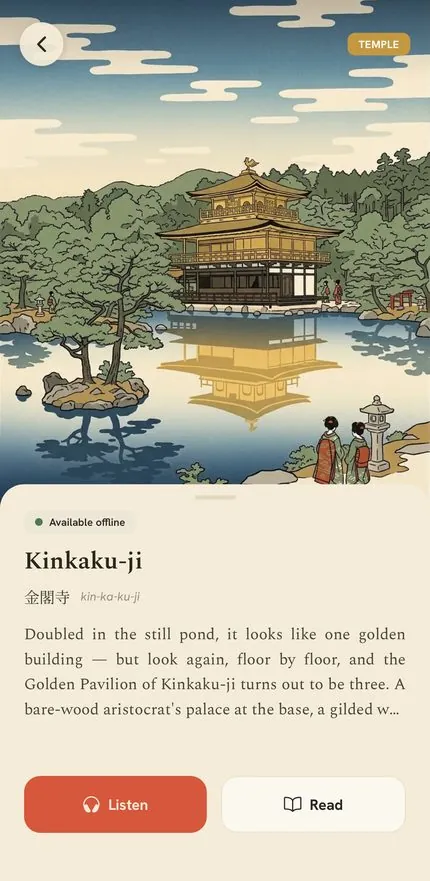
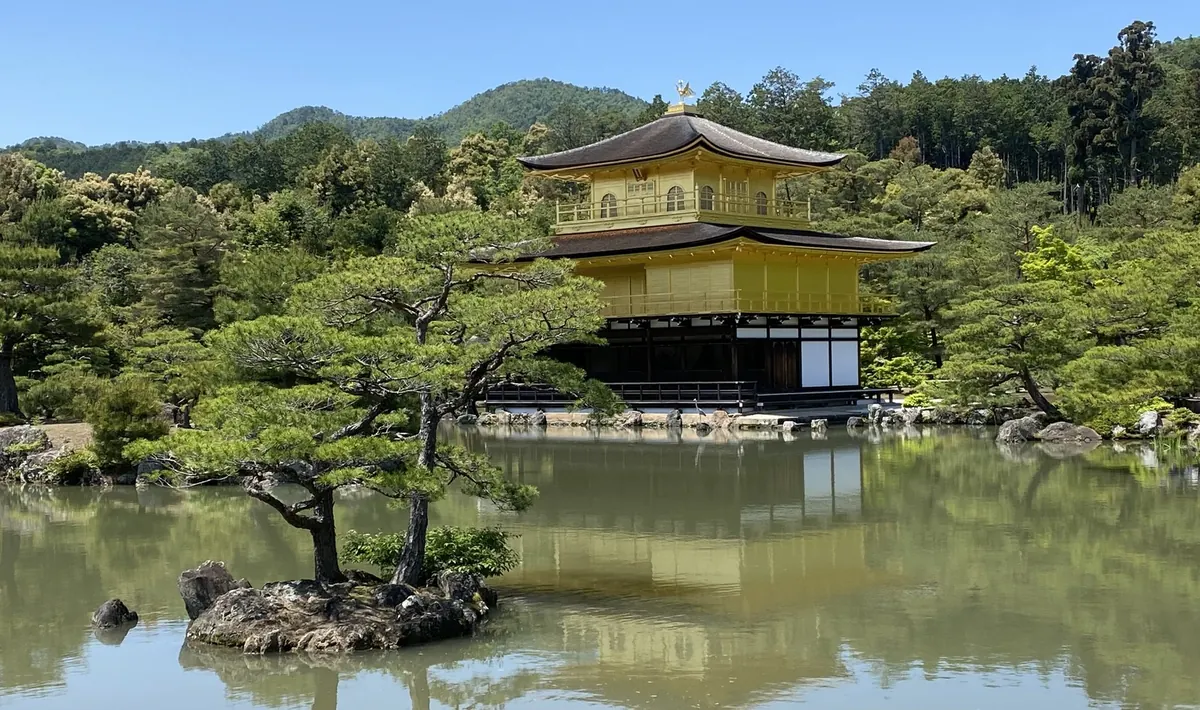
Kinkaku-ji (金閣寺), the Golden Pavilion, is a Zen temple whose three-storey pavilion stands at the edge of a pond.
Look at the pond before you look at the building. It's Kyōko-chi, the mirror pond, and when the water is still, a second pavilion floats in it, upside down. Then lift your eyes and read the pavilion itself, floor by floor. The gold begins one floor up. Gold leaf covers the second and third floors, and each of the three floors is built in its own style: a Heian palace style at the bottom, a samurai-house style in the middle and a Chinese Zen-temple style at the top.
The rest of the pavilion's story is in its guide, to read on the way there or to listen to by the water.
Ryōan-ji: count the stones
Ryōan-ji
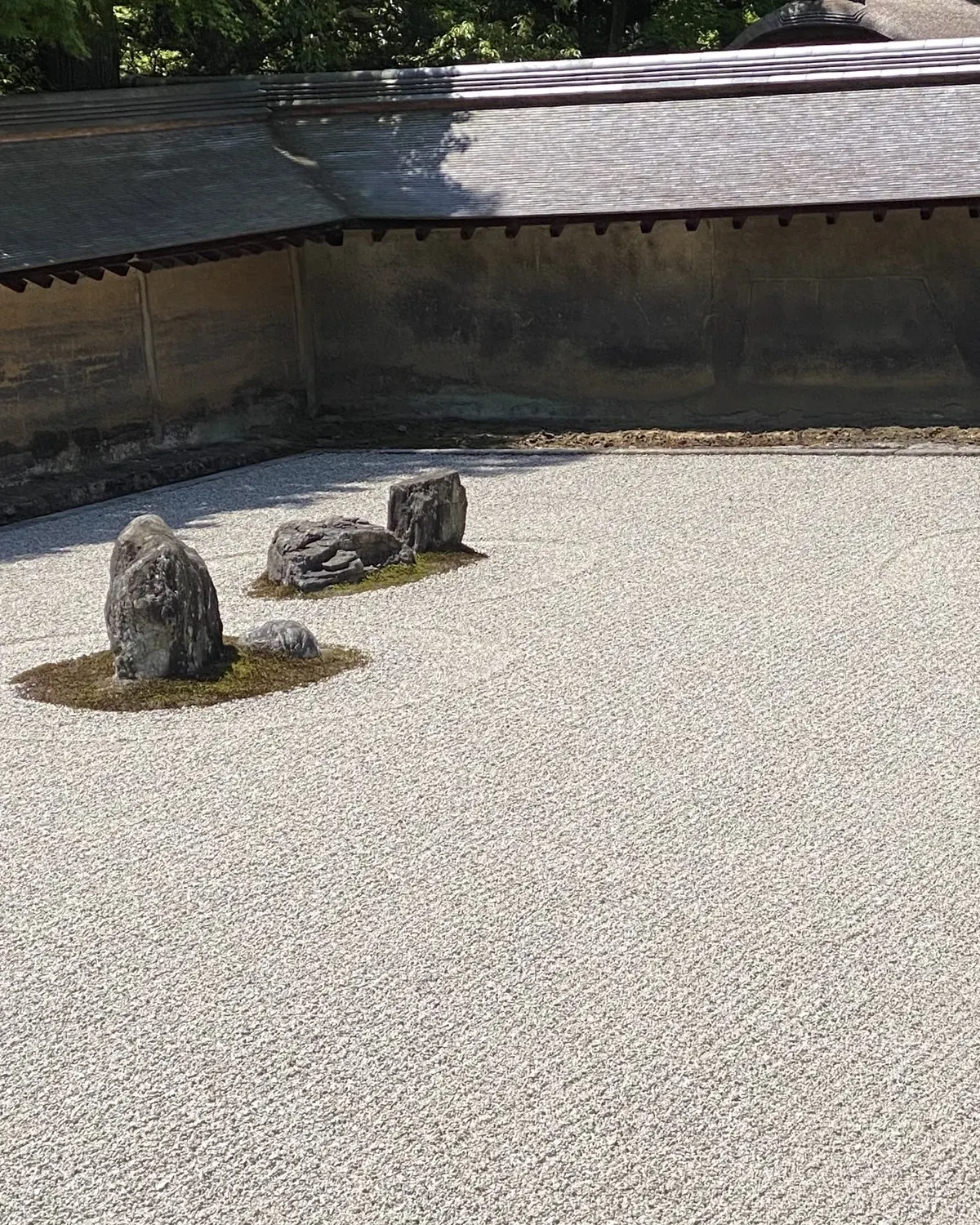
Ryōan-ji (龍安寺) is a Zen temple, and the detail to find is in its rock garden: stones set in raked white sand.
There are 15 stones, laid out in five groups: counted from the east, five, two, three, two and three. Find a place to sit and count them, then move and count again. Wherever you sit, it is said, one of the fifteen stays hidden. The Japan National Tourism Organization and Kyoto's tourism association both say so. The temple says the designer's meaning is still an open question, so the counting is yours.
Ryōan-ji's guide picks up where the counting stops, ready to read before you go or to hear as you sit.
Arashiyama & Sagano
This area has one Zen temple, with a garden that takes in the hills.
Tenryū-ji: the hills behind the pond
Tenryū-ji
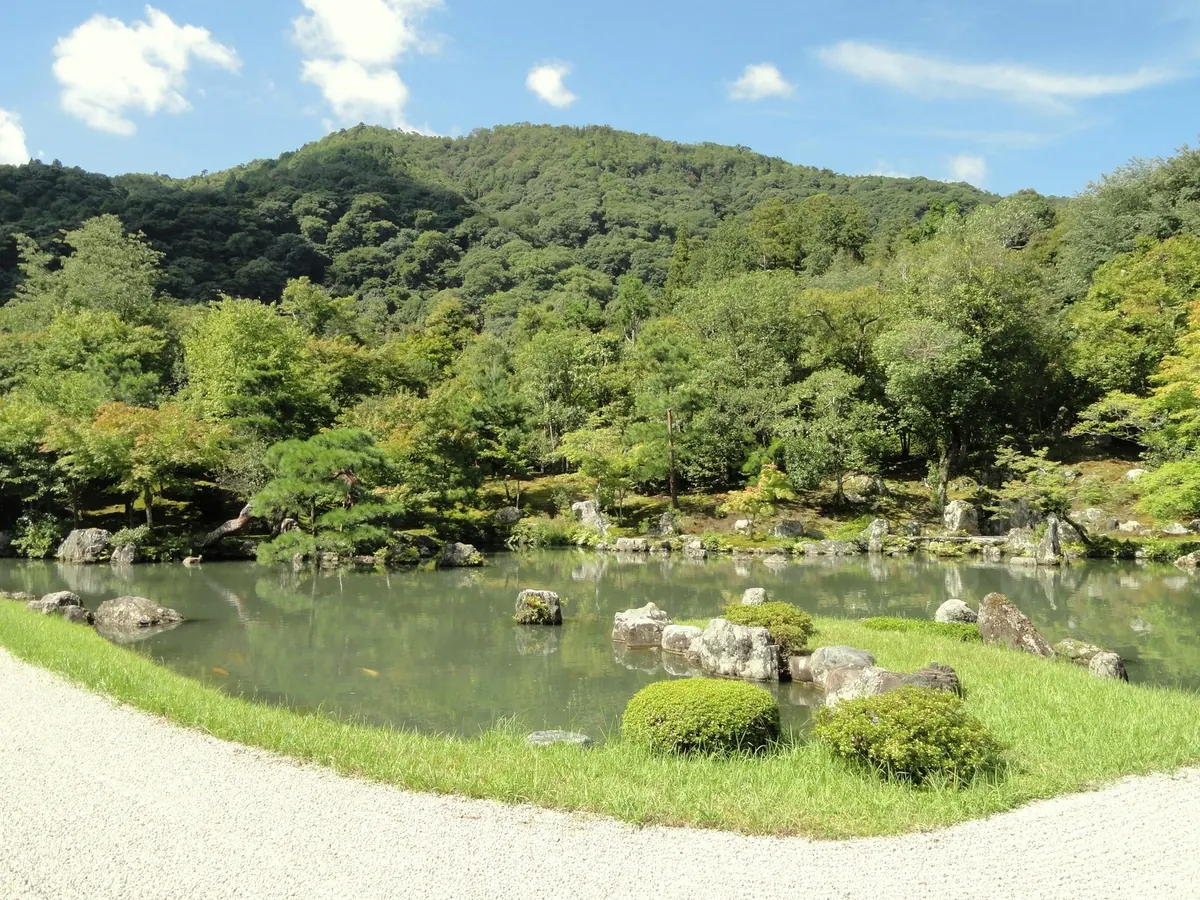
Tenryū-ji (天龍寺) is a Zen temple in Arashiyama. Its Sōgen-chi pond garden was laid out nearly seven hundred years ago by the Zen master Musō Soseki.
Stand where you can see the pond and the hills together, then look past the water. The hills behind the pond are part of the view, outside the garden itself. It's called borrowed scenery, shakkei, and the temple's own page uses the term: the garden takes in the Arashiyama hills, and they give it depth. Once you've noticed it, the pond and the hills read as one picture.
Tenryū-ji and the Arashiyama around it share one guide in the app, to read before you go or to listen to by the pond.
Northern Higashiyama
Here are two more Zen temples, one with a pavilion named for silver and one with an aqueduct.
Ginkaku-ji: the cone of sand
Ginkaku-ji
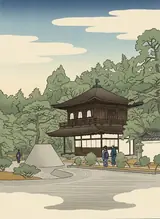
Ginkaku-ji (銀閣寺), the Silver Pavilion, is a Zen temple in Northern Higashiyama.
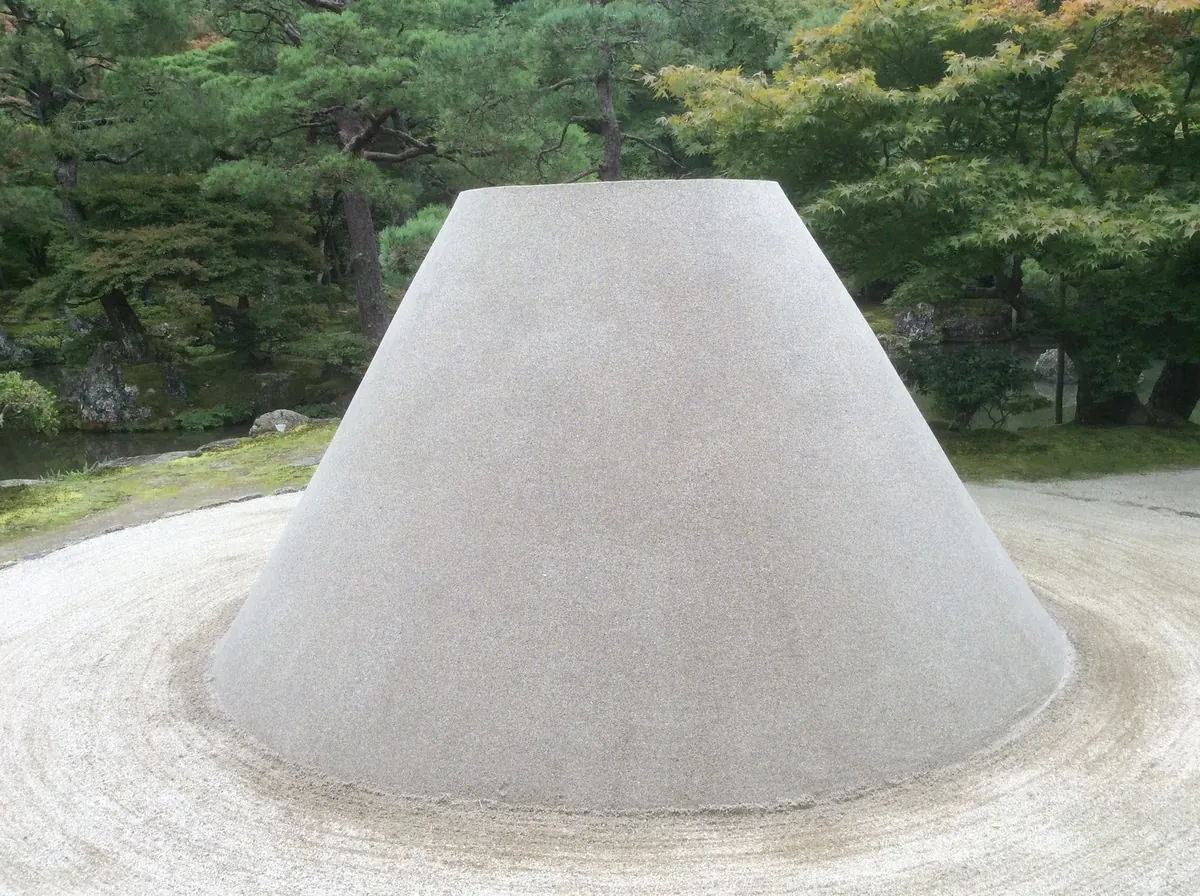
Before the pavilion, find the sand. White sand is shaped into two forms: the Kogetsudai, a flat-topped cone of raked sand, and beside it the Ginshadan, a "sea" of sand. The temple describes both as sand piled into shape. Give them a few minutes, and look at the cone's flat top and clean edges.
Then look at the pavilion. The silver is in the name alone. The name came later, in the Edo period, and the temple says it was given by contrast with Kinkaku-ji. How it came by that name is a longer story, and Ginkaku-ji's guide tells it, to read now or to hear on the day.
Nanzen-ji: an aqueduct in a Zen temple
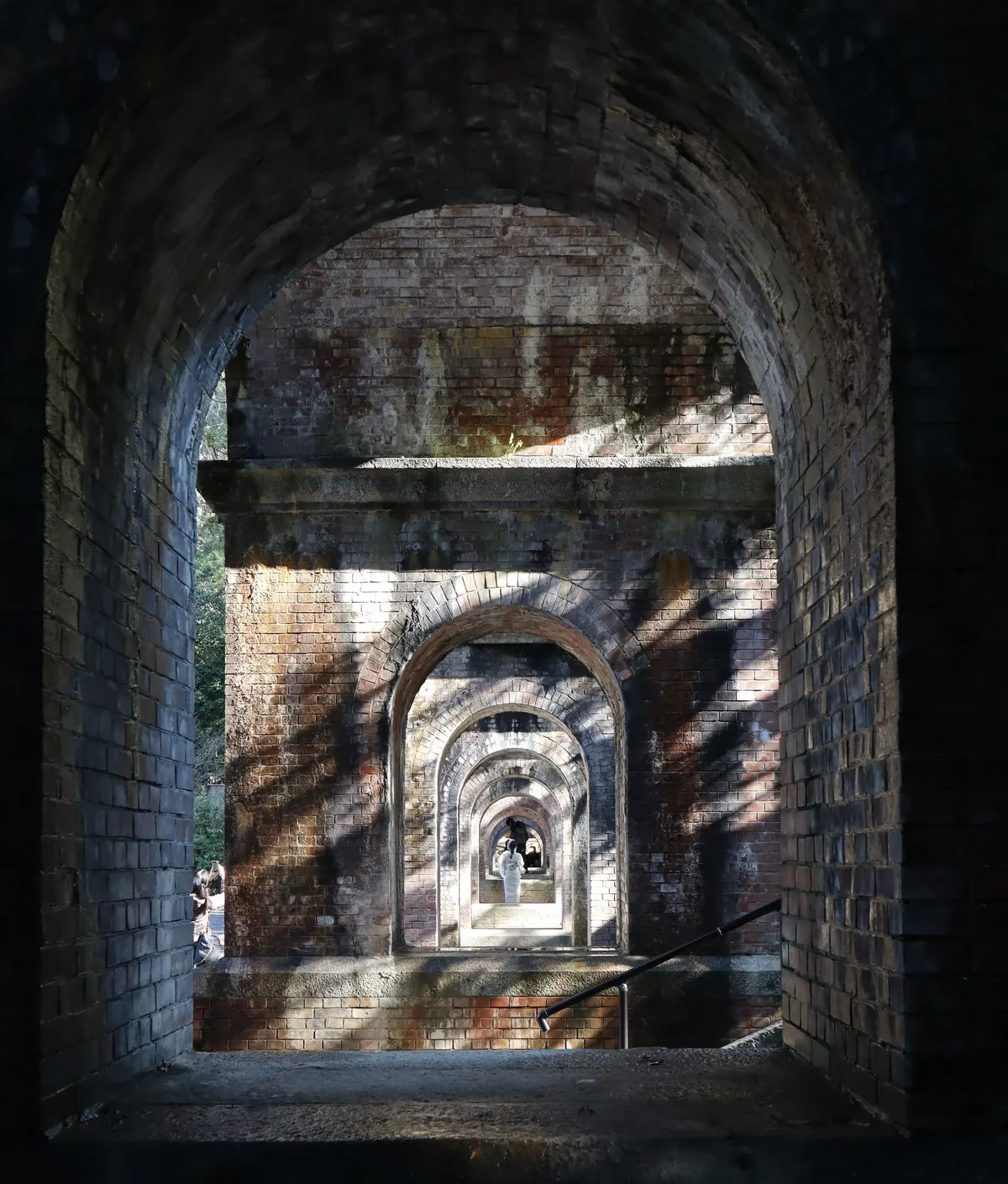
Nanzen-ji
Nanzen-ji (南禅寺) is a Zen temple in Northern Higashiyama, and the thing to find in its grounds is a surprise.
It's a brick aqueduct, the Suirokaku, finished in 1888: a long row of brick arches on granite abutments, carrying water across the grounds of a Zen temple. It's part of the Lake Biwa Canal, and water still runs over it. The date and the running water both come from Kyoto City's own canal museum. Stand under the arches and look along them, one framed inside the next.
Nanzen-ji's guide has the rest, the aqueduct included, to read before you go or to listen to under the arches.
Southern Higashiyama
The three temples here each come from a different tradition.
Kiyomizu-dera: the Otowa spring
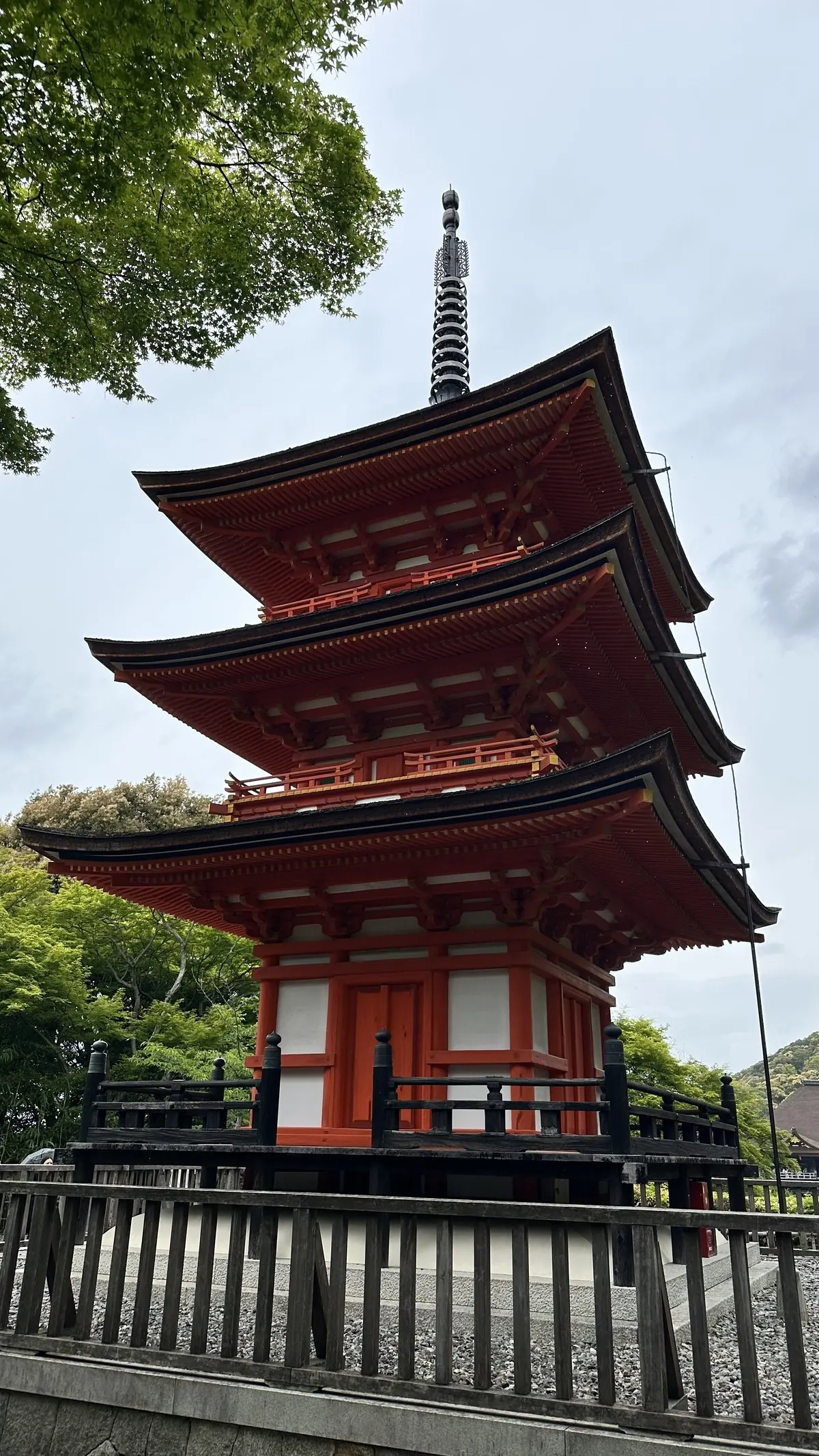
Kiyomizu-dera
Kiyomizu-dera (清水寺) is a temple in Southern Higashiyama, and the detail to find is water.
At the Otowa spring, the clear water falls in three streams, as the temple describes it, and its page says visitors take it with ladles, for purification and for wishes. A custom goes with it: they say you drink from one stream only. Treat it as a custom, pick your stream, and let the other two be.
The spring is one part of Kiyomizu-dera's story. The rest is in its guide, to read before you go or to listen to once you're there.
Sanjūsangen-dō: the standing Kannon
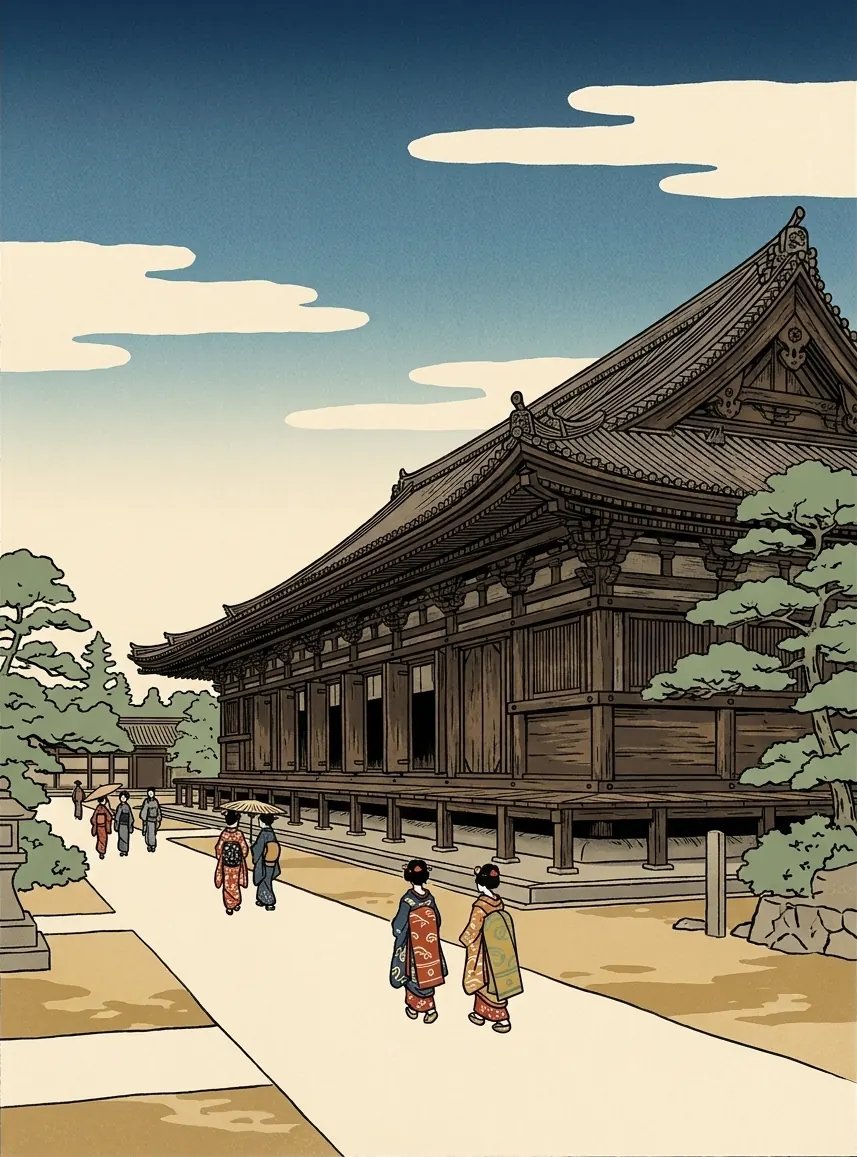
Sanjūsangen-dō
Sanjūsangen-dō (三十三間堂) is a temple in Southern Higashiyama, and everything to find is inside one hall.
You walk it with your shoes off, and there's incense in the hall. In the middle sits a great Kannon, and on tiers either side of it stand 1,000 more, life-size, the temple says. Each of the thousand is said to have its own face. Pick one row and look along it slowly, face by face.
Sanjūsangen-dō's guide tells the rest, to read before you go in or to listen to once your shoes are off.
Chion-in: a gate written with "three"
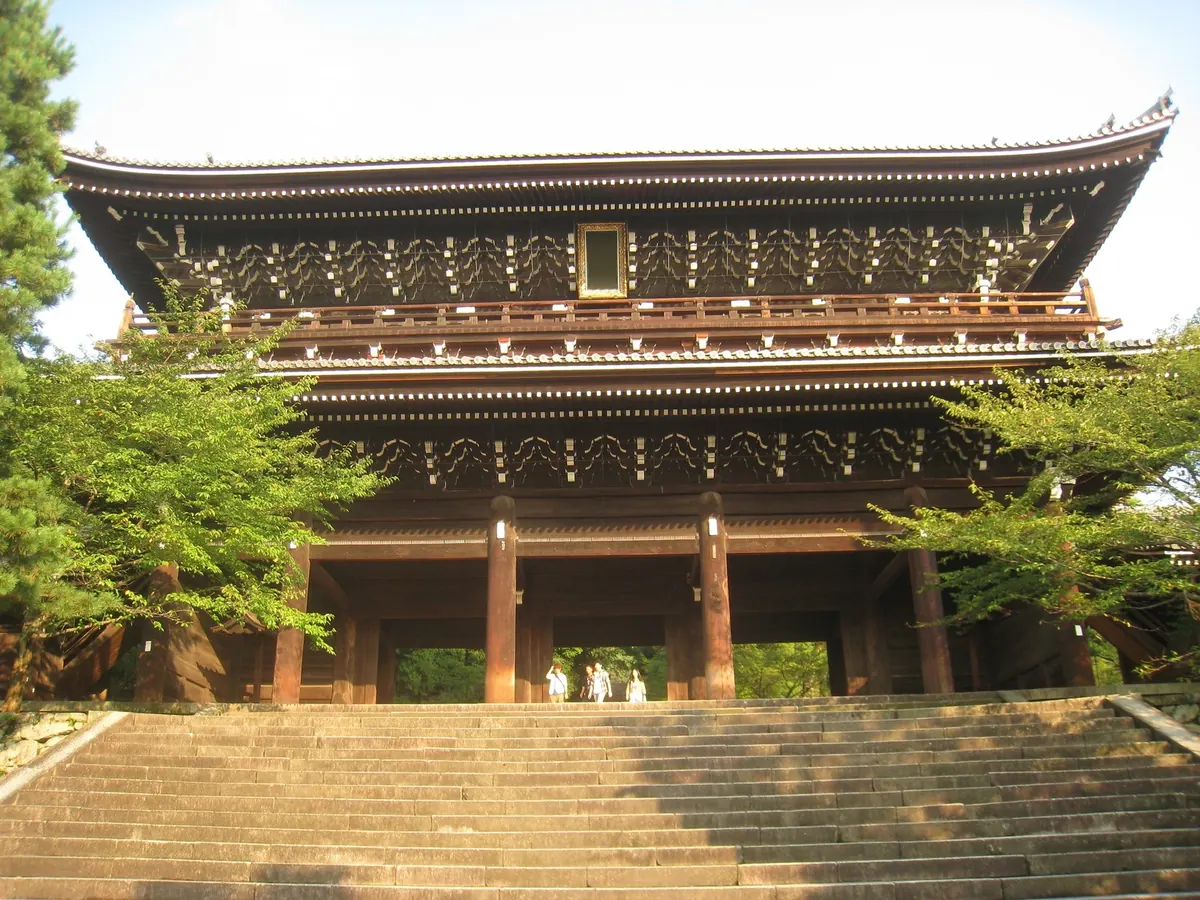
Chion-in
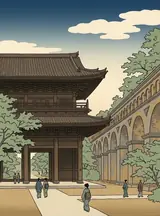
Chion-in (知恩院) is a Pure Land temple in Southern Higashiyama, and the thing to find is its main gate, the Sanmon, put up in 1621. About 24 metres high, it's a gate the temple calls one of the largest wooden gates in Japan.
The detail is in how its name is written. Chion-in writes it with the character for "three" (三門). Temple gates usually use "mountain" (山門). The two sound the same, and the different character has a reason behind it, rooted in Buddhist teaching.
The reason is in Chion-in's guide, to read on the way or to listen to beneath the gate.
South & Fushimi
Here, one Zen temple and one esoteric temple each have a tall wooden landmark to find.
Tōfuku-ji: the Sanmon
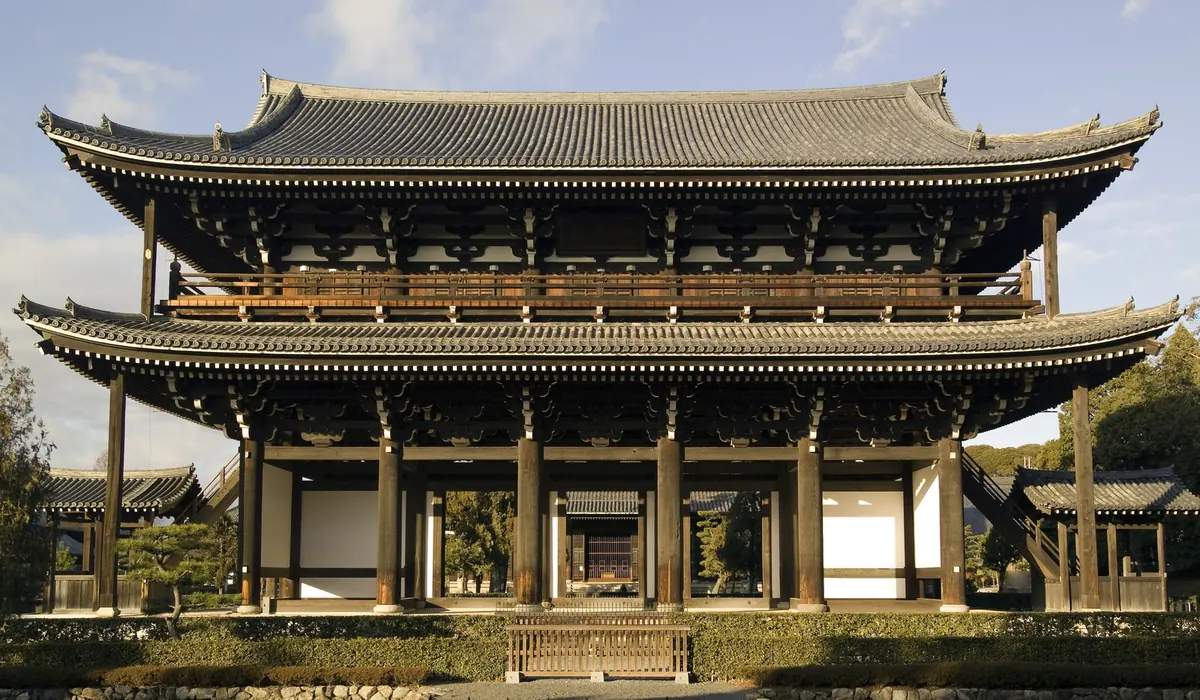
Tōfuku-ji
Tōfuku-ji (東福寺) is a Zen temple in the south of the city. Its name takes one character from each of two temples in Nara, Tōdai-ji and Kōfuku-ji.
The thing to find is its main gate, the Sanmon, finished in 1425. It stands two storeys and 22 metres high, it's a National Treasure, and the temple calls it the oldest of the Zen sanmon gates. Stand back far enough to take in both roofs at once.
For the bridge and the ravine, and a visit in autumn, see Tōfuku-ji in Autumn. The rest is in Tōfuku-ji's guide, to read or to listen to.
Tō-ji: the five-storey pagoda
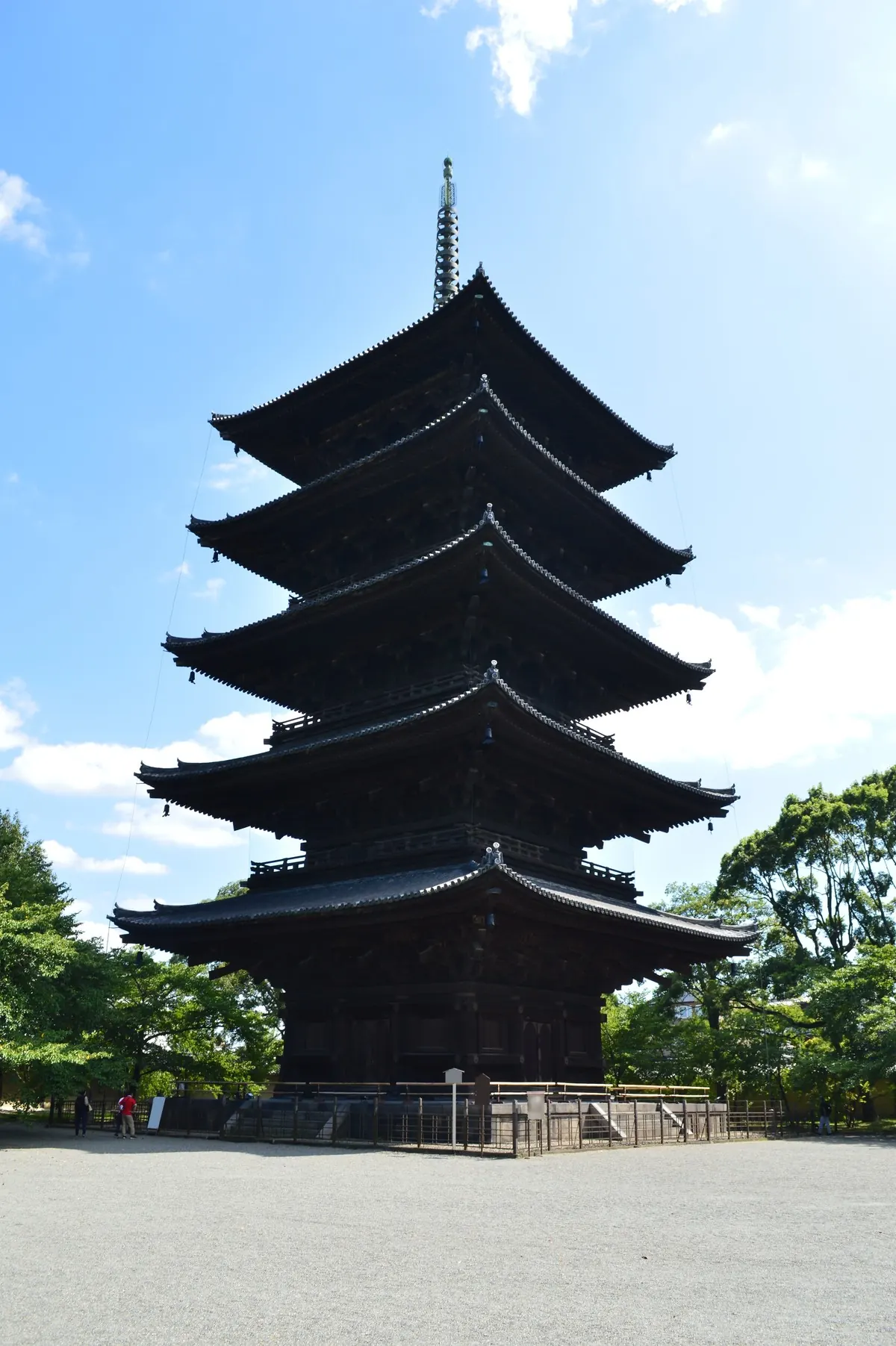
Tō-ji's five-storey pagoda
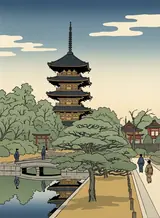
Tō-ji (東寺) is a temple in the south of the city, and its five-storey wooden pagoda stands about 55 metres high, the tallest traditional wooden building in Japan. Rebuilt in 1644, it's a National Treasure.
Then find the garden pond in front of it. On a calm day the pagoda stands there a second time, upside down in the water, its five roofs stacked downward. Find a spot where the whole pagoda fits in the water.
Tō-ji's guide tells the rest of the pagoda's story, to read before you go or to listen to by the pond.
How to use this list
Pick an area, and let its temples share a day. Kinkaku-ji and Ryōan-ji are both in North-West Kyoto. Ginkaku-ji and Nanzen-ji share Northern Higashiyama. Kiyomizu-dera, Sanjūsangen-dō and Chion-in are all in Southern Higashiyama, and Tōfuku-ji and Tō-ji are in South & Fushimi. Tenryū-ji has Arashiyama & Sagano to itself on this list. Start with the area you're staying in, or the one with the detail you most want to see. Two or three temples, with time to find the detail at each, make a fuller day than all ten seen in a hurry.
Questions
What are the best temples to visit in Kyoto?
Here are ten temples to plan around, by area. Kinkaku-ji and Ryōan-ji are in North-West Kyoto, and Tenryū-ji is in Arashiyama & Sagano. Ginkaku-ji and Nanzen-ji are in Northern Higashiyama. Kiyomizu-dera, Sanjūsangen-dō and Chion-in are in Southern Higashiyama, and Tōfuku-ji and Tō-ji are in South & Fushimi. Each has one detail worth finding, from the second pavilion in Kinkaku-ji's pond to Ryōan-ji's fifteen stones, of which, it is said, one always stays hidden.
Is Fushimi Inari a temple?
Fushimi Inari Taisha is a shrine, a Shinto site, while the ten places on this list are Buddhist temples. A shrine has a torii at its entrance and a temple has a sanmon gate, according to the Japan National Tourism Organization. Temple or Shrine? explains how to tell the two apart in Kyoto.
Which Kyoto temples are Zen?
Of the ten on this list, six are Zen temples: Kinkaku-ji, Ryōan-ji, Tenryū-ji, Ginkaku-ji, Nanzen-ji and Tōfuku-ji. Both pavilions, gold and silver, are among them. The other four, Kiyomizu-dera, Sanjūsangen-dō, Chion-in and Tō-ji, belong to other traditions.