Tōfuku-ji in Autumn: The Bridge, the Ravine and the Gold Maple
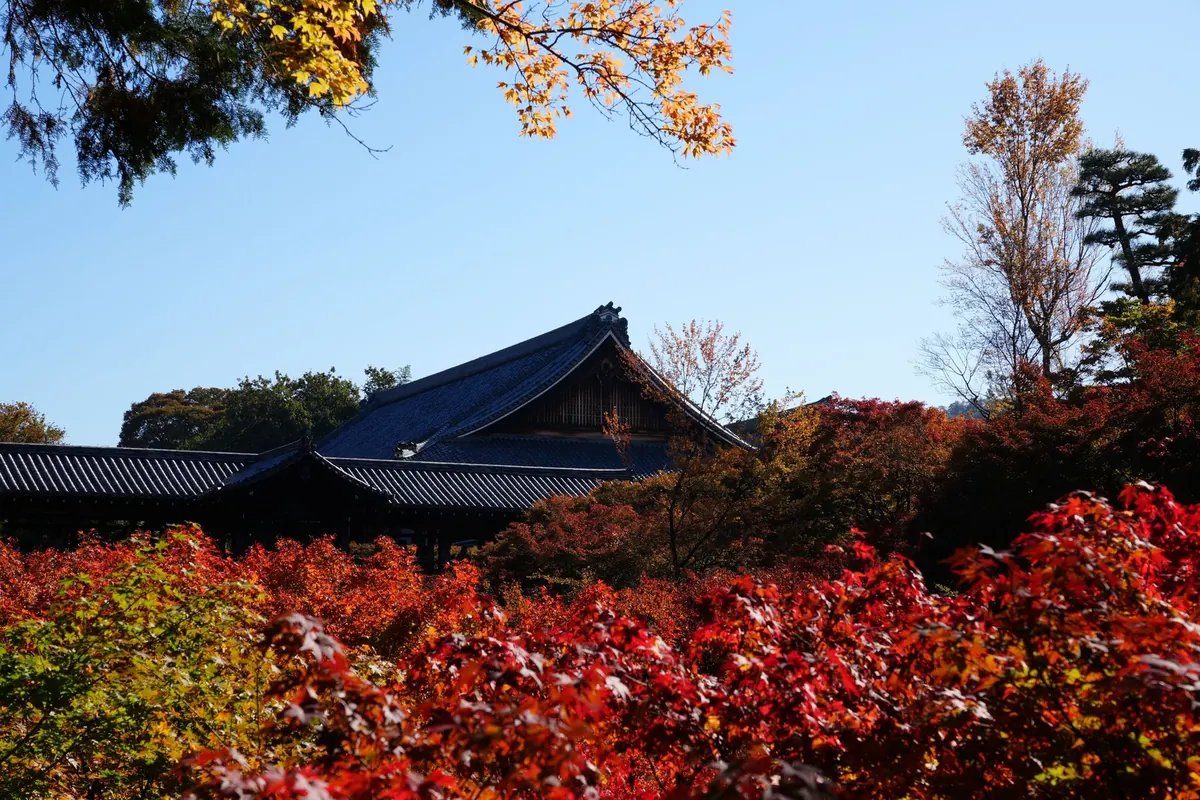
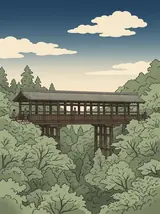
In autumn, Tōfuku-ji's ravine holds about two thousand maples, and you cross it on a roofed wooden bridge level with their leaves. Beyond the bridge are a gate the temple calls the oldest of the Zen sanmon gates, and gardens the temple says were built from its own salvaged stone.
The bridge is Tsūten-kyō, and it's the reason people come. This page gives it its due, then takes you further in: to a gate finished in 1425, to seven stones laid out as the Big Dipper, and to a chequerboard garden with a last stone worth finding. After a short history comes this autumn's practical detail from the temple's own pages, in one dated list to keep for the trip.
The bridge and the ravine
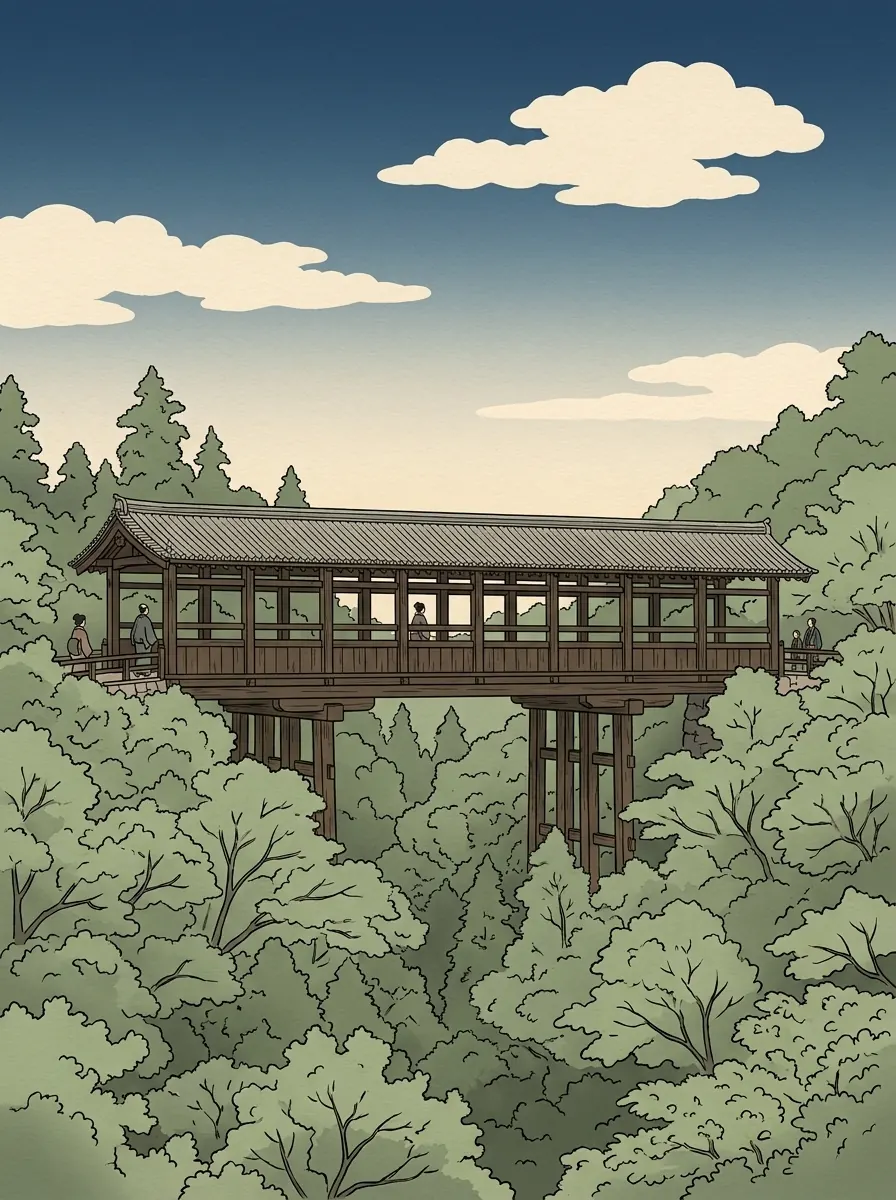
A wooded ravine, the Sengyokukan, runs through Tōfuku-ji's grounds, and Tsūten-kyō crosses it: a long wooden bridge under its own roof. About two thousand maples grow in the ravine. Their canopy comes up level with the shoulders of anyone crossing. That figure comes from other sources.
So on Tsūten-kyō you cross at the height of the leaves, with the roof over your head and maples all round you at shoulder height.
The temple's page says that in the autumn period, because of the crowds, visitors may be asked to refrain from taking photos on the Tsūten-kyō and Gaun-kyō bridges. If you're asked, the crossing is still yours to take in.
The gold maple
Look for one maple that turns gold. It's a three-lobed maple, rare by the temple's own account, and the temple's page says it is said to have been brought from Song Dynasty China by the founder, Shōichi Kokushi.
It's a single tree, easy to miss until someone points it out, and hard to forget once you've found it. Read its story in Tōfuku-ji's guide before you go, then look for it on the day.
Beyond the bridge
The bridge is the reason people come to Tōfuku-ji, and in the autumn crowds it's where the temple may ask visitors to refrain from taking photos. Past it are three stops that are easy to walk by, and better for knowing what you're looking at: a gate, gardens of reused stone, and one last stone.
The Sanmon
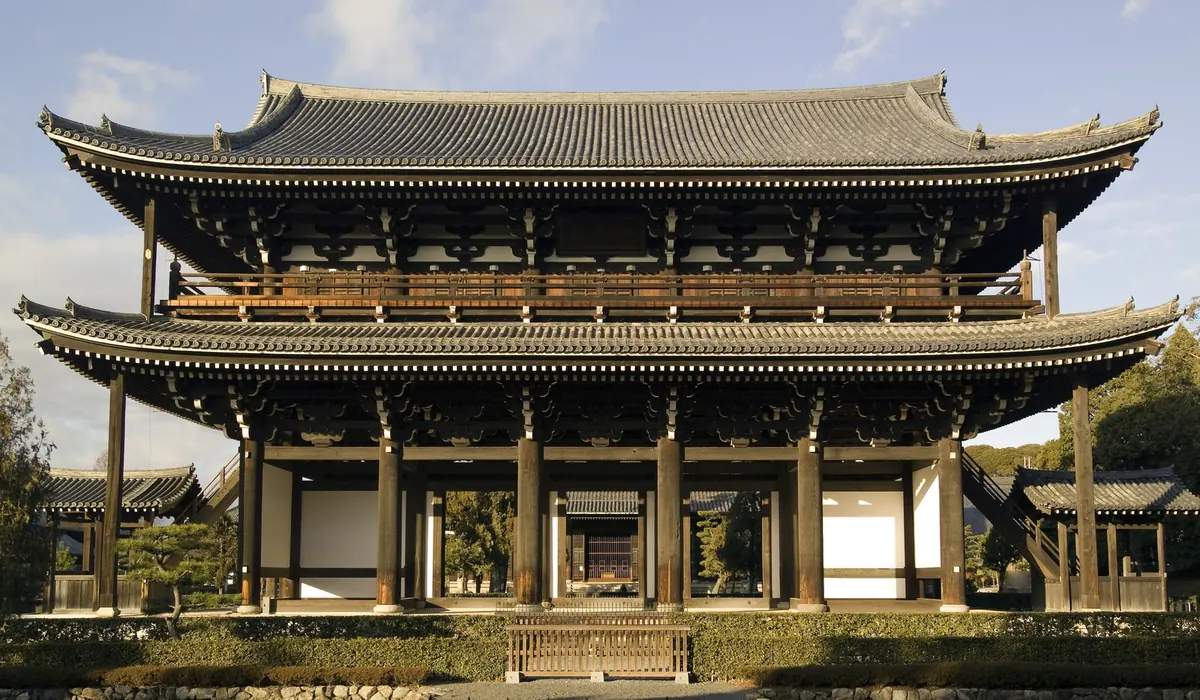
Tōfuku-ji's Sanmon
A sanmon is a temple's main gate, and Tōfuku-ji's was finished in 1425. Its name is written 三門, with the character for "three". It stands two storeys and 22 metres high, and it has been a National Treasure since 1952. The temple calls it the oldest and largest of the Zen sanmon gates. Stand far enough back to take in both roofs at once, then look up at the rows of wooden brackets under the eaves.
The abbot's hall gardens
The seven stones of the Big Dipper were made from the foundation stones of the temple's latrine, the Tōsu, left over when it was taken down for repair. They stand on end in the east garden of the abbot's hall, the hōjō.
The Tōsu (東司) was the toilet building of Tōfuku-ji's Zen monks. Tōfuku-ji says its Tōsu is the oldest in Japan, a building from the early Muromachi period (1300s), and it has been an Important Cultural Property since 1902. For Zen monks, the temple's guide adds, even a trip to the Tōsu followed strict manners, because it was part of their training.
That garden of seven stones is one of four dry gardens Shigemori Mirei completed around the abbot's hall in 1939, one on each side, east, south, west and north, each with its own design. By the temple's own account, there was one condition: all the materials already in the temple's grounds were to be used again.
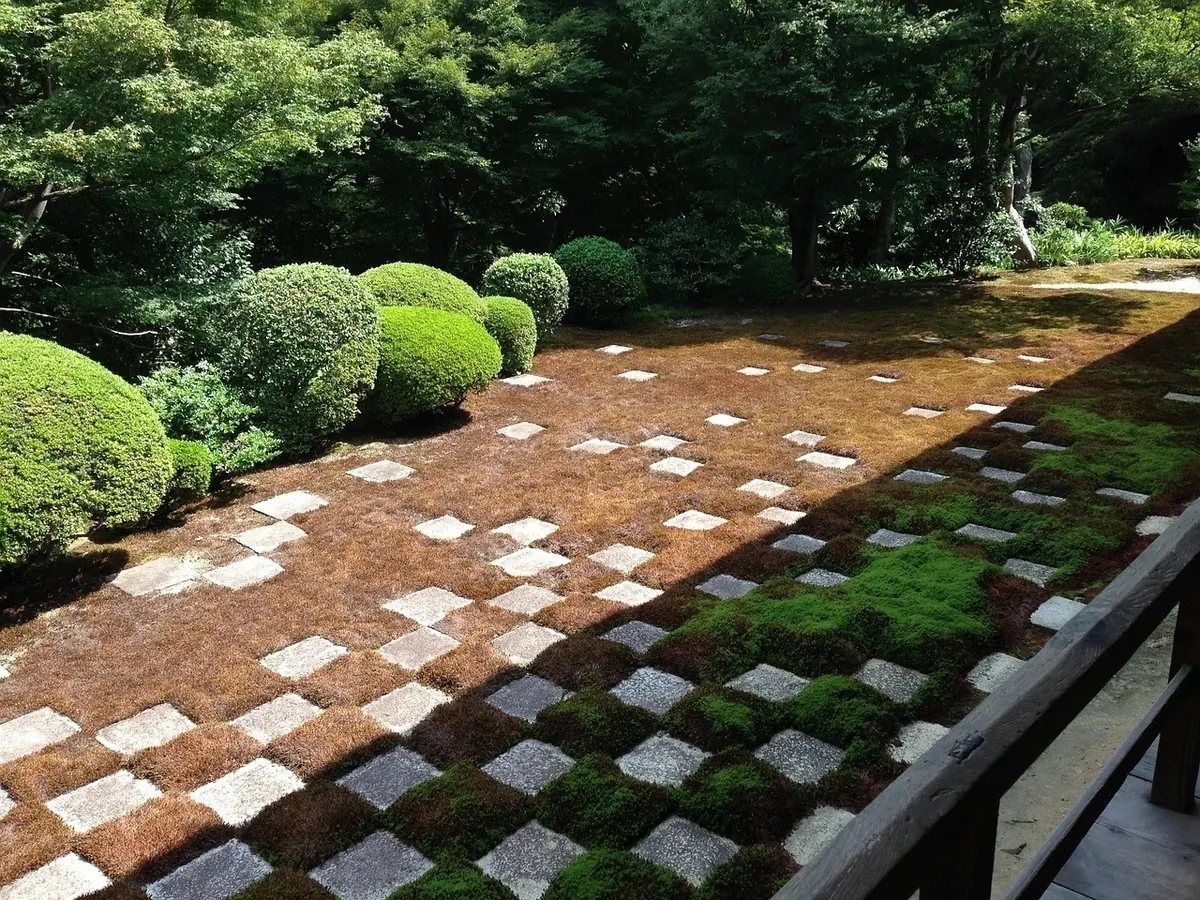
You can see that condition at work in the north garden. Its small chequerboard of square stones and moss is made from cut paving stones that once lined the path from the imperial messengers' gate, the Chokushi-mon, to the abbot's hall. Stand at the north side of the hall and you're looking at the old path, set down again in a new shape. The west garden has a larger chequerboard, of azalea hedges and kerbstones the temple says once edged paving elsewhere in its grounds.
The last stone
Tōfuku-ji
In the north garden, follow the chequerboard with your eyes. It starts out almost regular, then loosens, and toward the valley it breaks up into single stones. Those were set in white sand at first, and moss has grown over it since. Look for the last one. It's a small thing to find, and a good one to have been told about.
A short history
Tōfuku-ji
Building began in 1236 under the regent Kujō Michiie, and it took nineteen years, until 1255. According to the temple's history, he took one character from each of two temples in Nara for the name, 東 (tō) from Tōdai-ji and 福 (fuku) from Kōfuku-ji, wishing to rival them. In December 1881, a fire destroyed the Buddha hall, the dharma hall, the abbot's quarters, and the kitchen and priests' quarters. The four gardens around the abbot's hall followed in 1939.
This autumn at Tōfuku-ji
As of 21 October 2026, this list follows the temple's visiting guide and access page. The dates, hours, tickets and rules below are the temple's own, the Tōsu line comes from Kyoto City's tourism site, and the temple says its autumn dates change every year, so open the pages again before you go.
- Autumn period: it runs from 14 November to 6 December 2026.
- Hours: in the autumn period, Tsūten-kyō opens at 8:30. Last reception is at 16:00, and the gate closes at 16:30. From 1 to 13 November, the hours are 9:00 to 16:00, and from 7 December, 9:00 to 15:30.
- Tickets: in the autumn period, the Tsūten-kyō and Kaisandō ticket is ¥1,000 for adults and ¥500 for children (elementary and junior high school), against ¥600 and ¥300 at other times. From 14 November to 6 December, this ticket is sold on its own, and it covers one entry.
- Photos: in the autumn period, visitors may be asked to refrain from taking photos on the Tsūten-kyō and Gaun-kyō bridges.
- Also asked: in the autumn period, the temple suspends hand-written goshuin. All year, the temple asks visitors to keep eating, drinking, tripods, sketching and pets out of the grounds.
- The Tōsu: Kyoto City's tourism site says the building is usually closed, and visitors can look inside from its east side.
- Car parks: the access page says they're closed from 25 October to 10 December. The temple asks visitors to come by public transport.
- Getting there: from Kyoto Station, the JR Nara Line takes about 3 minutes to Tōfukuji Station, then it's about 10 minutes on foot. City bus 88 or 208 from Kyoto Station takes about 15 minutes, then it's about 4 minutes on foot.
When the leaves turn is a forecast, and it changes through the season, so we keep it in one dated box, in Kyoto's Autumn Temples.
The rest of Tōfuku-ji is in its guide, from the gold maple's story to the gate and the gardens: read it before you go, or listen on the day.
Questions
What's special about Tōfuku-ji in autumn?
About two thousand maples fill Tōfuku-ji's ravine, and Tsūten-kyō, a roofed wooden bridge, carries you across it level with their leaves. Beyond the bridge are the Sanmon, finished in 1425, which the temple calls the oldest of the Zen sanmon gates, and the abbot's hall gardens of 1939, made, by the temple's own account, from materials already in its grounds. Look out, too, for a maple that turns gold.
When is Tōfuku-ji's autumn season?
The temple's visiting guide gives this autumn's period as 14 November to 6 December, as dated in the box above, and Tsūten-kyō opens at 8:30 during it. The temple says the dates change every year, so check its page before you go.
Can you take photos on Tōfuku-ji's bridge?
The temple's page says that in the autumn period, because of the crowds, visitors may be asked to refrain from taking photos on the Tsūten-kyō and Gaun-kyō bridges. It's a request for the busy weeks, so follow what the temple asks on the day. All year, it asks visitors to keep tripods out of the grounds.
What is the Tōsu at Tōfuku-ji?
The Tōsu (東司) is the old toilet building of Tōfuku-ji's Zen monks. Tōfuku-ji says it's the oldest in Japan, a building from the early Muromachi period (1300s), and it has been an Important Cultural Property since 1902. The temple says the seven stones of its Big Dipper garden came from the Tōsu, left over when it was taken down for repair.