Eikan-dō in Autumn: The Maples and the Buddha Who Looks Back
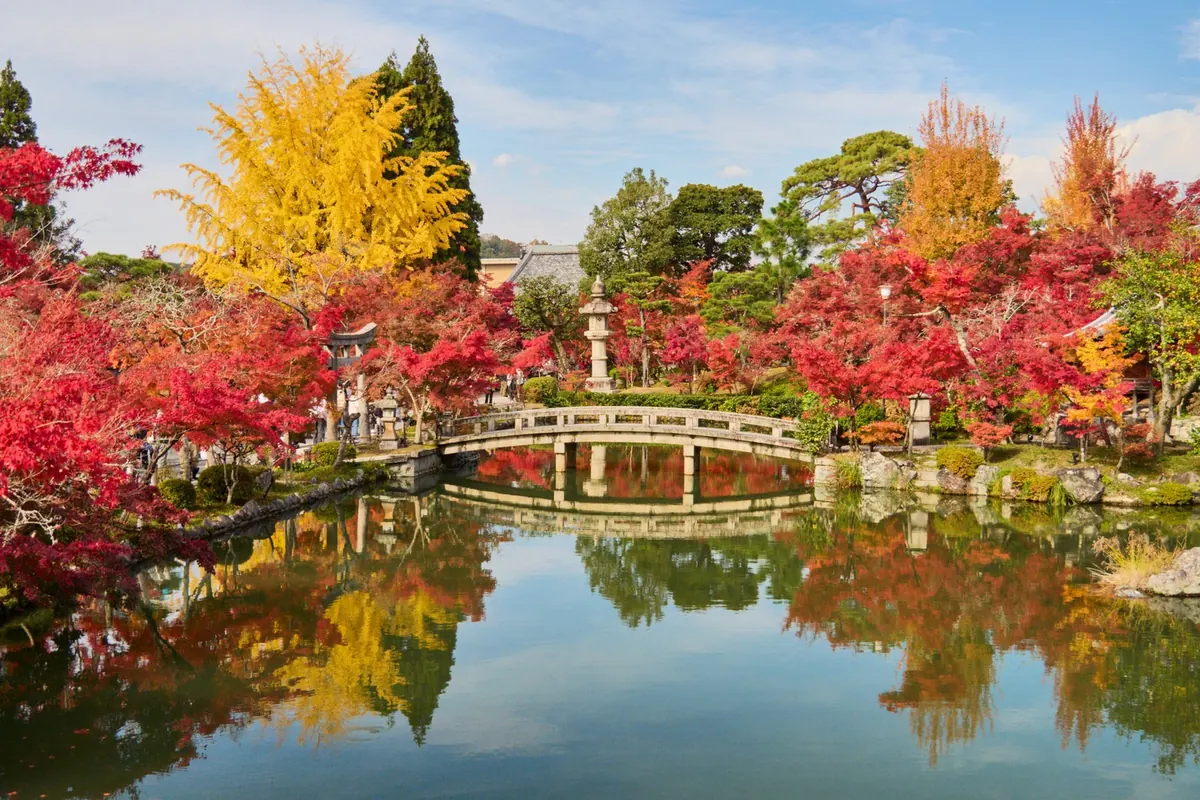
Photo from an earlier autumn.
Eikan-dō is a Kyoto temple known for its maples: around three thousand of them ring its pond. It's also home to a standing Amida Buddha whose head is turned back over its left shoulder. The maples are what bring people in autumn, and the Buddha who looks back is the story they take home.
This page starts at the pond, tells the temple's story of the Buddha up to the moment it looks back, and explains where the name comes from. The season's dates and the temple's requests sit in one dated list near the end. The rest is in Eikan-dō's guide, to read or to listen to.
The maples around the pond
Around three thousand maples grow at Eikan-dō, by Kyoto City's count, and they ring the pond. The temple's own pages give it a name to match, the Eikan-dō of maples, and its English introduction puts that name down to a garden full of maple trees.
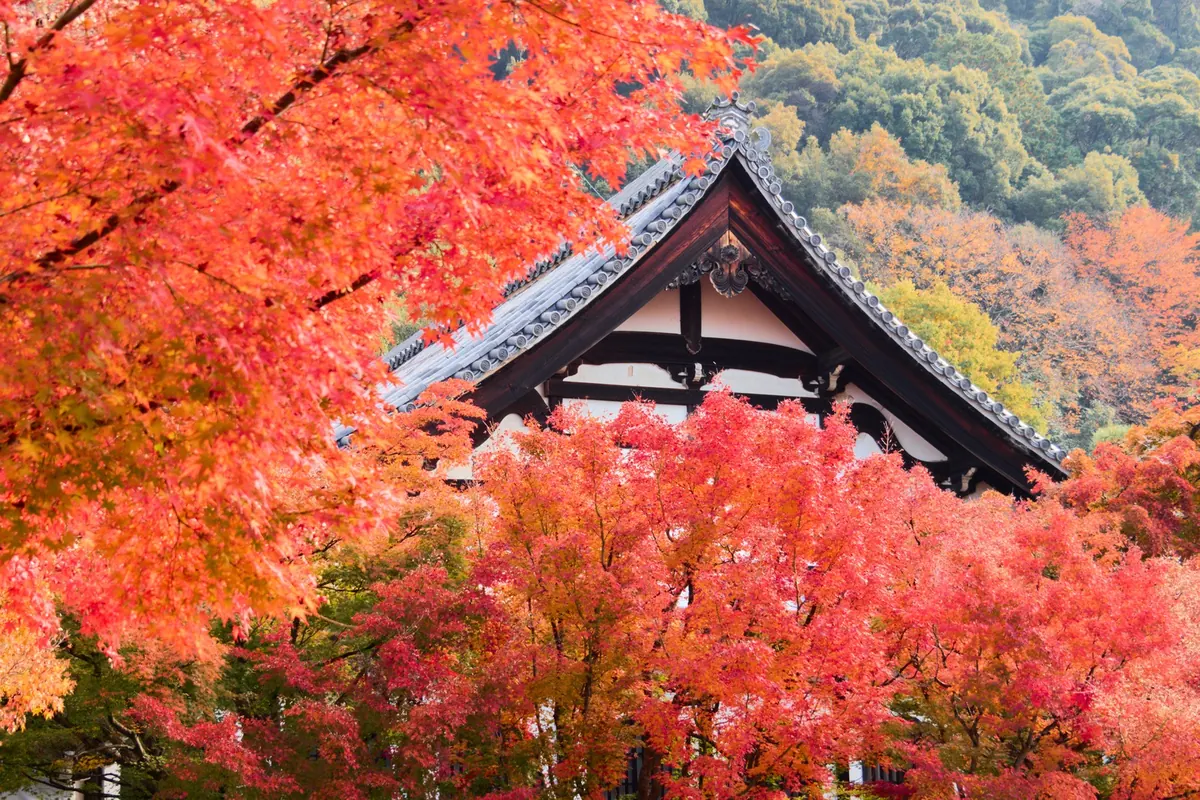
Eikan-dō. Photo from an earlier autumn.
Start at the water's edge. The maples ring the pond, so from the bank you look across the water to more of them. Give the pond a few minutes before you move on.
Behind the pond, the ground rises into a hillside. The Tahōtō pagoda stands on it, and the temple's chronology records its completion ceremony in 1928. Look up the hillside to find it.
So the view has three parts: the water, the ring of maples around it, and the hillside with the pagoda above. That's what people come for.
To set Eikan-dō beside two more temples for the season, read Kyoto's Autumn Temples. On this page, the temple's principal image comes next, with the story the temple tells about it.
The Buddha who looks back
Early on the morning of 15 February 1082, by the temple's own account, a priest stopped walking.
He was Eikan, then about fifty, and he'd been walking around the altar. The temple says the figure of Amida left its place on the altar and led the way. Eikan stood still, stunned. Then the Amida looked back over its left shoulder.
That's as far as this page goes. The temple's account carries on, and Eikan-dō's guide tells the rest: what the Amida said, what Eikan asked of it, and why the figure stands as it does. Read it before you go, or listen to it on the day.
The temple tells this story on its page about the Mikaeri Amida, the Amida who looks back. It's the temple's principal image, a wooden standing Amida about 77 centimetres tall, with its head turned back over its left shoulder. It's also an Important Cultural Property, a national designation.
The halls the temple lists as open in autumn, by day and after dark, are in the dated list below. For the figure itself, ask at the temple on the day.
Eikan, the priest in the story, matters to the temple in one more way: he's the reason for its everyday name.
How Eikan-dō got its name
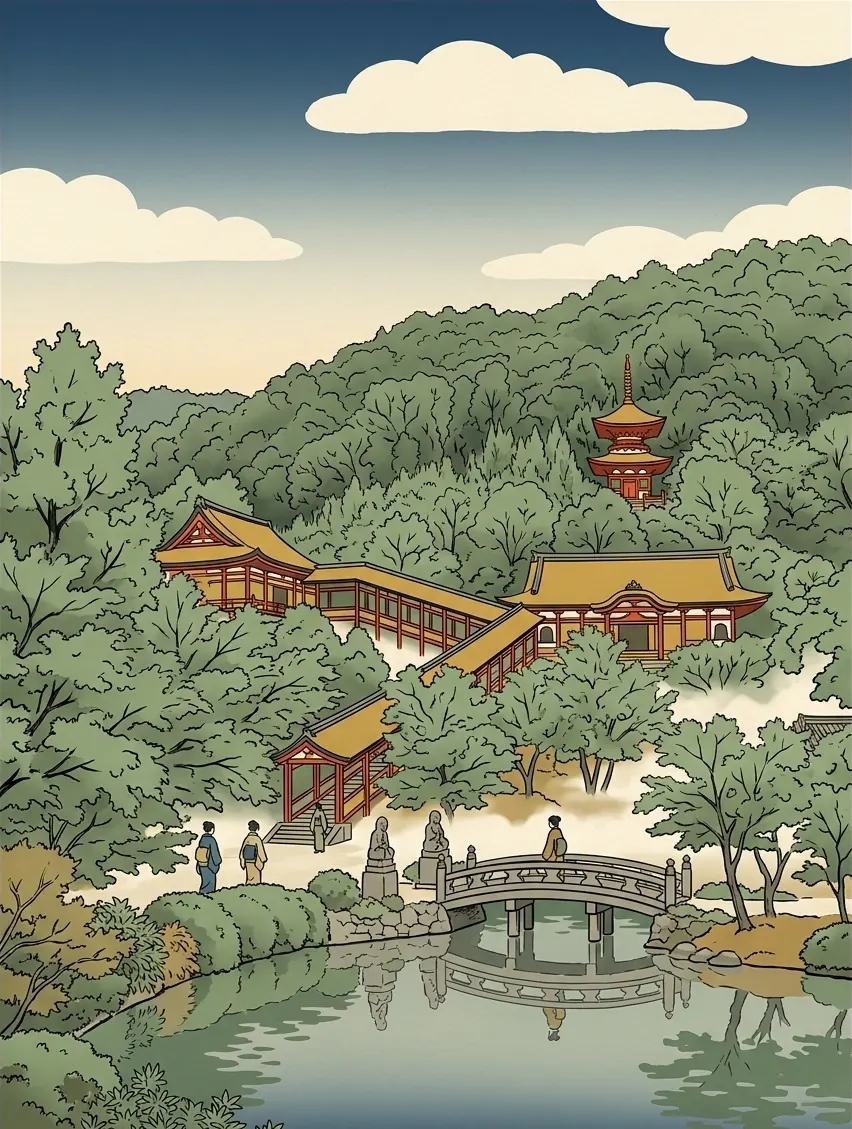
Zenrin-ji, known as Eikan-dō
Eikan-dō is the name people use, and Zenrin-ji is the formal one. In full, the temple is Shōju Raigōzan Muryōju-in Zenrin-ji. By the temple's chronology, its founder, Shinshō, acquired the site in 853, and in 863 Emperor Seiwa gave the temple a plaque bearing the name Zenrin-ji.
The everyday name came from a person. The temple says it's called Eikan-dō after Eikan (1033 to 1111), its seventh head priest, whose name the temple's English introduction spells Yokan. He's the same Eikan who, by the temple's account, stopped walking on that February morning in 1082. So the temple carries two names: Zenrin-ji, from an emperor's plaque, and Eikan-dō, from a priest. Every time someone says Eikan-dō, they're saying his name.
Eikan-dō in autumn, as of 6 November 2026
Each line below comes from the official page linked on it. Dates and rules can change during the season, so open the pages again before you go.
By day and after dark, Eikan-dō is two separate visits this autumn, so plan for one or both.
- By day: the autumn temple treasures exhibition runs from 11 November to 6 December 2026. Reception is open from 9:00 to 16:00, and the gate closes at 17:00 (temple's notice and visiting page, in Japanese).
- After dark: the light-up runs from 20 November to 6 December 2026. Reception is open from 17:30 to 20:30, and the gate closes at 21:00 (temple's notice and visiting page, in Japanese).
- Two separate visits: day and night are separate entries, each with its own ticket, and day visitors leave the grounds by 17:00 (English visiting page).
- Tickets: each ticket is sold on the day and valid that day (English visiting page).
- Fees: the temple's notice says fees were revised this year, so see its visiting page for the current fees (both in Japanese).
- Open: by day, the temple's page lists the exhibition, the halls including the Amida-dō, and the garden. After dark, it lists the Amida-dō and the garden (visiting page, in Japanese).
- Closed during the exhibition: from 11 November to 6 December, the Garyū-rō corridor is closed to passage and the Senbutsu-dō hall is closed. The Tahōtō pagoda may close in crowds or bad weather, and reception may end earlier when it's crowded (English visiting page).
- What the temple asks: bring a shoe bag (a carrier bag works too), to cut plastic waste. Tripods, monopods, cars and tour buses stay outside the grounds (visiting page, in Japanese).
- Shoes: Kyoto's visitor etiquette, from the Kyoto City Tourism Association, asks for shoes off on tatami, and says a small shoe bag can help.
- Getting there: City Bus 5 to the Nanzen-ji Eikan-dō-michi stop, then 3 minutes on foot. Kyoto City's listing (in Japanese) says this stop is closed in the busy season, and gives two alternatives: the Higashi-Tennōchō bus stop, 8 minutes on foot, and Keage Station on the Tōzai subway line, 15 minutes on foot.
The rest of Eikan-dō is in its guide, from the Buddha who looks back to the temple's two names: read it before you go, or listen on the day.
Questions
What is Eikan-dō known for?
Eikan-dō is known for its maples. Around three thousand of them ring its pond, by Kyoto City's count, and the temple's own pages call it the Eikan-dō of maples. It's also known for the Mikaeri Amida, a standing Amida Buddha with its head turned back over its left shoulder, and for the story the temple tells about it.
What is the Buddha who looks back?
The Buddha who looks back is the Mikaeri Amida, Eikan-dō's principal image: a wooden standing Amida, about 77 centimetres tall, with its head turned back over its left shoulder. By the temple's own account, early on the morning of 15 February 1082, the priest Eikan was walking around the altar when the Amida came down, led the way and looked back over its left shoulder. The rest of the story is in Eikan-dō's guide.
Are day and night visits at Eikan-dō separate?
Yes. As of 6 November 2026, Eikan-dō's English visiting page says the autumn day exhibition and the night light-up are separate entries, each with its own ticket, and day visitors leave the grounds by 17:00. Each ticket is sold on the day and valid that day.